When does a deck need a permit in the Baltimore area?
In Baltimore City, every deck needs a permit. In Baltimore County, it depends on height and size. Here's where the lines are and what each office asks you to submit.
· By Solomon Construction & Remodeling, Baltimore remodeling contractor
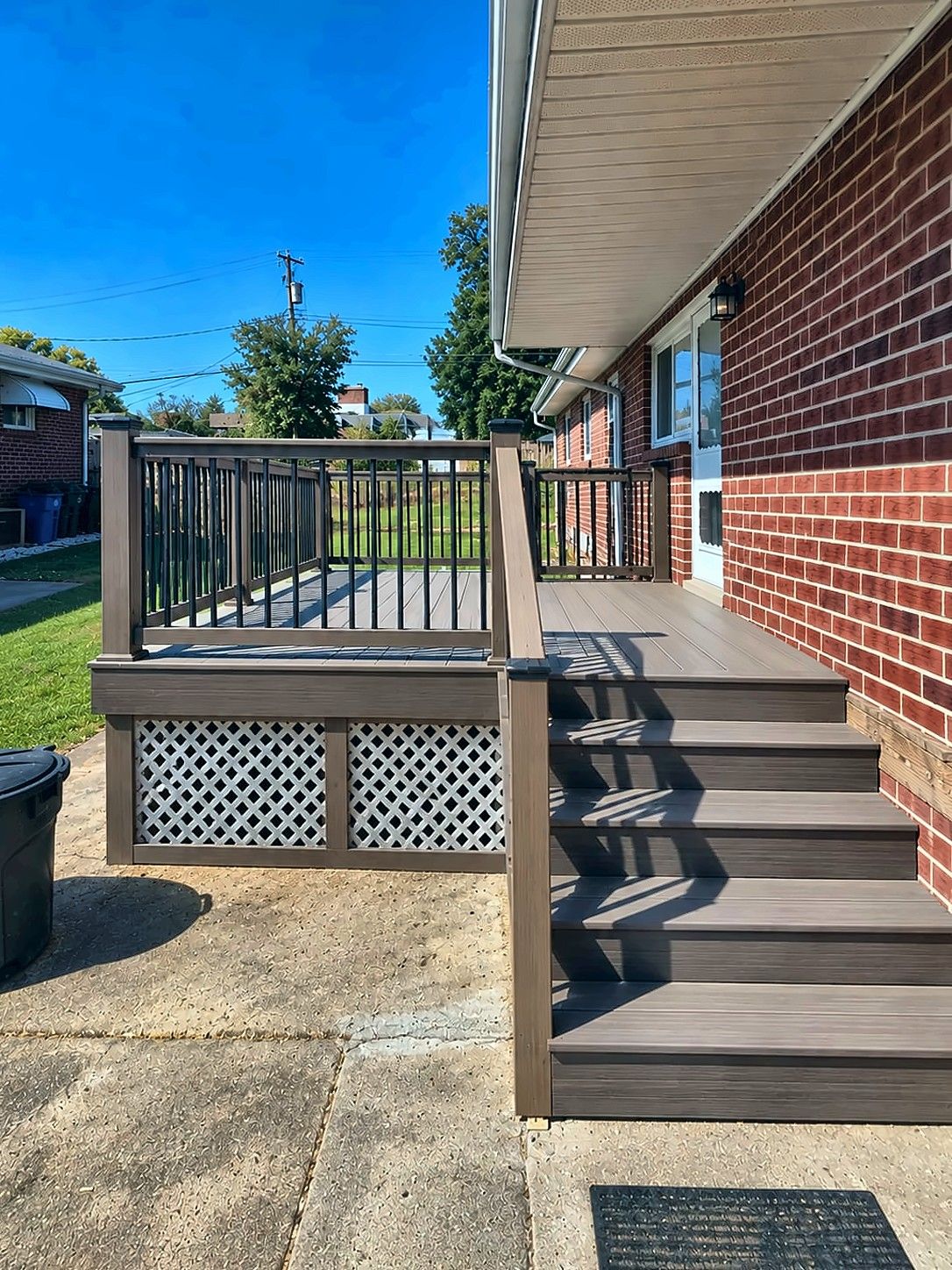
The answer depends on which side of the city line you live on. Baltimore City requires a permit for a deck of any size. Baltimore County requires one once a deck is more than 16 inches off the ground or larger than 120 square feet, and for every deck in a few protected areas. Howard and Anne Arundel counties draw their own lines again. The details below come from each jurisdiction’s published rules; confirm for your address before you build.
Deck permits at a glance
| Jurisdiction | When a deck needs a permit | Worth knowing |
|---|---|---|
| Baltimore City | Any size | Scaled drawings; rooftop decks need sealed drawings and Planning review |
| Baltimore County | More than 16 in. above the lowest grade, or over 120 sq ft; any deck in a historic district, floodplain or the Critical Area | Site plan under 600 sq ft; construction plans at 600 sq ft and up |
| Howard County | Every deck except those under 25 sq ft | Replacing deck boards only is a repair; replacing railings needs a permit |
| Anne Arundel County | Attached decks, including replacing a deck, its railings or structural members | Replacing deck boards only needs no permit |
Does every deck need a permit in Baltimore City?
Baltimore City did not adopt the small-deck exemption in the national residential code. The City’s building code marks that exemption “Not Adopted,” and decks don’t appear on the City’s list of work exempt from permits, so a deck of any size needs one. (City Building Code, IRC part)
For a deck on a one- or two-family home, the City asks for drawings to scale: a site plan showing how far the deck extends, its height, a side elevation and a top-view framing plan. The application goes in through E-Permits, and zoning reviews it first.
Rooftop decks are their own category. Their construction documents must show setbacks and be signed and sealed by a Maryland-licensed architect or engineer, and rowhouse roof decks are referred to Planning for design review. (DHCD special referrals)
When does a deck need a permit in Baltimore County?
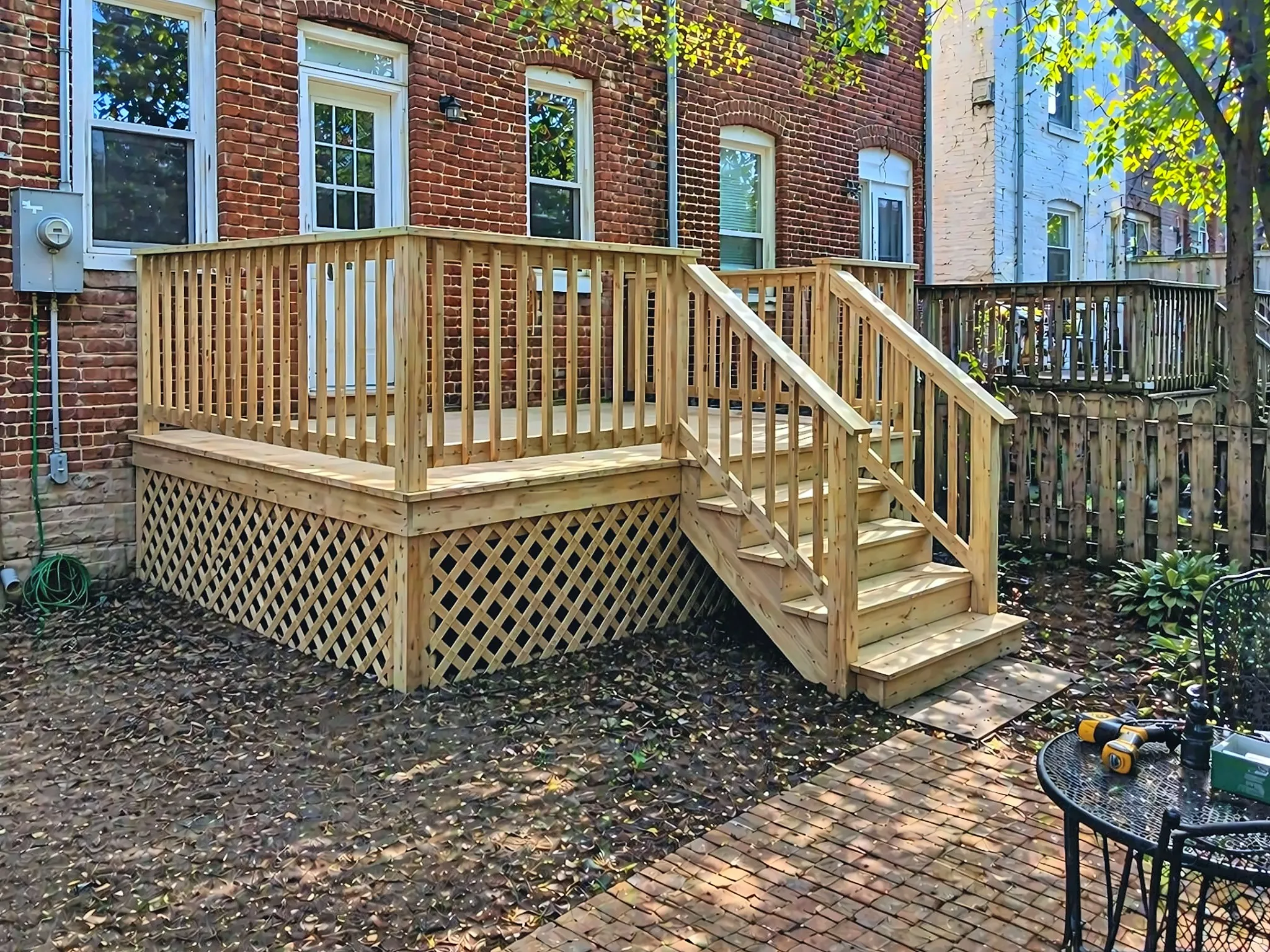
In Baltimore County, a building permit is required for a deck more than 16 inches above the lowest grade, or larger than 120 square feet. A low, small platform can go without one. (Baltimore County PAI: decks)
Every deck needs a permit, whatever its size, if the property is:
- in a proposed or designated County historic district, or on the Landmarks List
- in the floodplain
- in the Chesapeake Bay Critical Area
What you submit scales with the deck. Under 600 square feet, the County asks for a site plan. At 600 square feet and up, it asks for construction plans as well. Over 3,000 square feet, the plans must be signed and sealed by a Maryland-licensed design professional.
What about Howard County and Anne Arundel County?
In Howard County, only decks under 25 square feet are exempt; every other deck needs a permit, with footings at least 18 inches across (or 16 by 16) and 30 inches deep. Swapping deck boards, wood or composite, counts as ordinary repair and needs no permit, but replacing handrails or guardrails does, because they’re structural. (Howard County DILP)
In Anne Arundel County, attached decks need a Residential Single Family Dwelling permit, and that includes replacing an existing deck, its railings or its structural members. A deck within 3 feet of the house counts as attached. Replacing deck boards only doesn’t need a permit. A small freestanding deck, under 200 square feet and under 3 feet high, may not need one, but only outside the Critical Area and the Bog Contribution Drainage Area. (Anne Arundel Inspections and Permits)
What about enclosing a deck or porch?
Turning an existing deck or porch into a weatherproof room is a different job in the County’s eyes: it’s treated as an addition, held to the same setbacks as the house. That can bring requirements an open deck never had, from footings and framing to insulation and windows. Our home additions page covers how we look at that kind of project.
Stairs come with the deck
A stair attached to a deck is part of the deck, so it’s covered by the same permit. In Baltimore City, freestanding exterior stairs and front steps also need a permit, because no City exemption covers them. We go through those rules, including steps that reach the sidewalk, on our exterior stairs and front steps page.
Repairs and re-decking
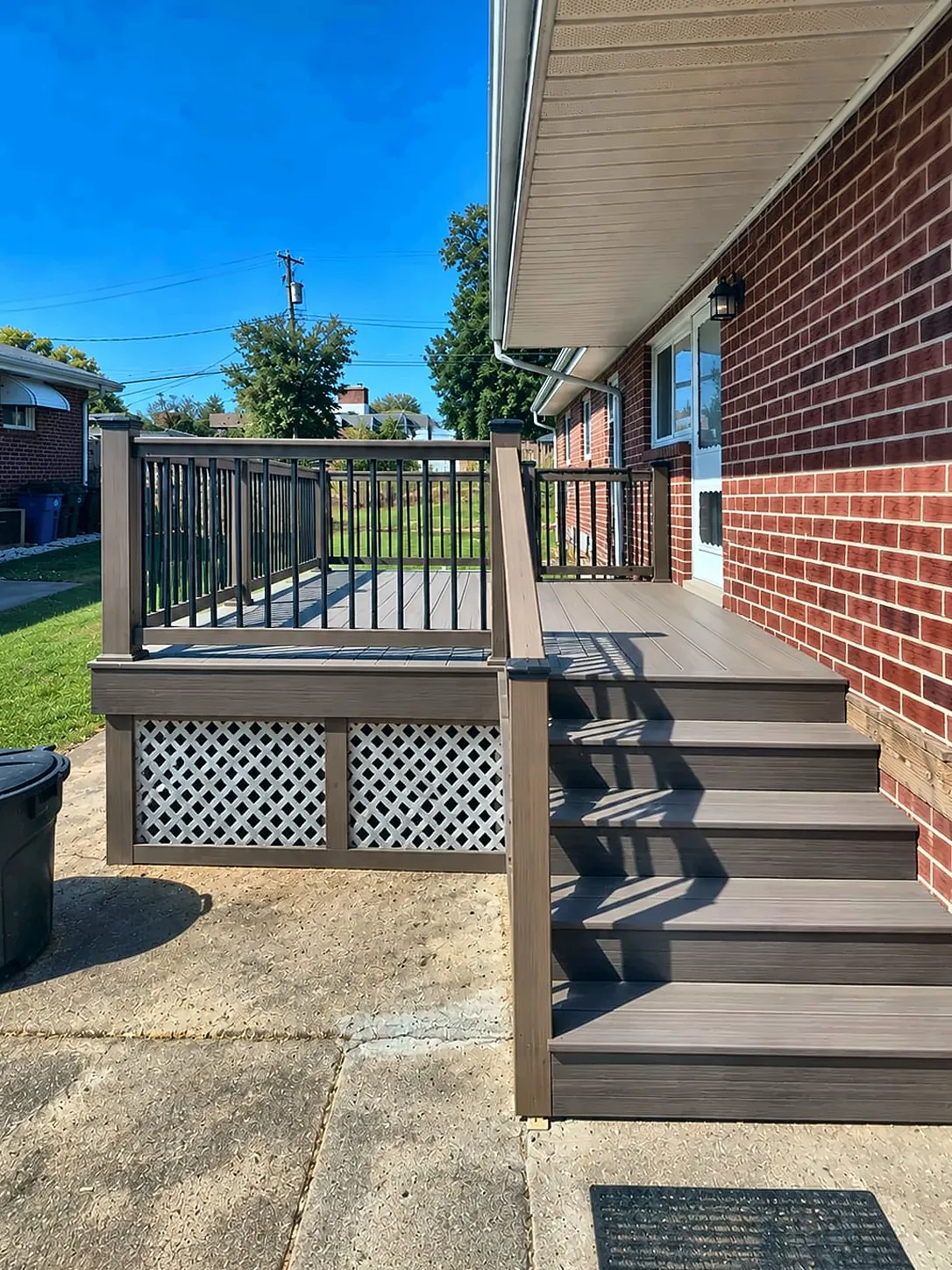
Replacing worn boards on a sound frame is a lighter job than building a new deck, but the permit question still turns on the rules above, especially in the City, where the code doesn’t exempt decks by size. When we look at a deck, we start with the frame underneath: posts, beams, joists and the ledger where it attaches to the house. That decides whether you need new boards, a repair or a full rebuild, and it shapes the permit conversation too. More on that on our deck building and repair page, and in two of our own jobs: a re-decked balcony and rebuilt rear stairs, and an elevated side walkway with two-story stairs. Town-by-town notes are on our deck pages for Baltimore City, Towson, Columbia and Pasadena.
Before you call a contractor
A little homework speeds things up. Know your lot lines, and check whether your house is in a historic district, the floodplain or the Critical Area. Baltimore County’s online Permit Review Tool shows all three for a County address. In the City, the permit office can confirm CHAP status.
Permit rules change. This post reflects what each jurisdiction published as of October 2026; check the links above or call the permit office for your address before you rely on it.
Related services